Video captures more than a photograph: it records people's faces, movements and voices, shows what they say, and often shows private places in detail. That makes permissions even more important. A brand film, documentary or online video may need releases from the people in it, permission from property owners, a permit to film in a public place, and special care with children, voices and drones. This lesson explains the main permissions for video, when you usually need them, and how to keep clear records.
Why video needs careful permissions
The ideas behind model releases, property releases, privacy and consent were explained for photography in model releases and permissions, property and location considerations and privacy and consent. Video uses the same principles, but it also records voices and conversations, shows people for longer, and is often used in advertising or shared widely online.
Warning:This lesson gives general information. Laws about filming, recording voices, privacy and drones differ greatly between countries and even cities. Always check the local rules, and ask a specialist for important commercial projects.
Releases for people
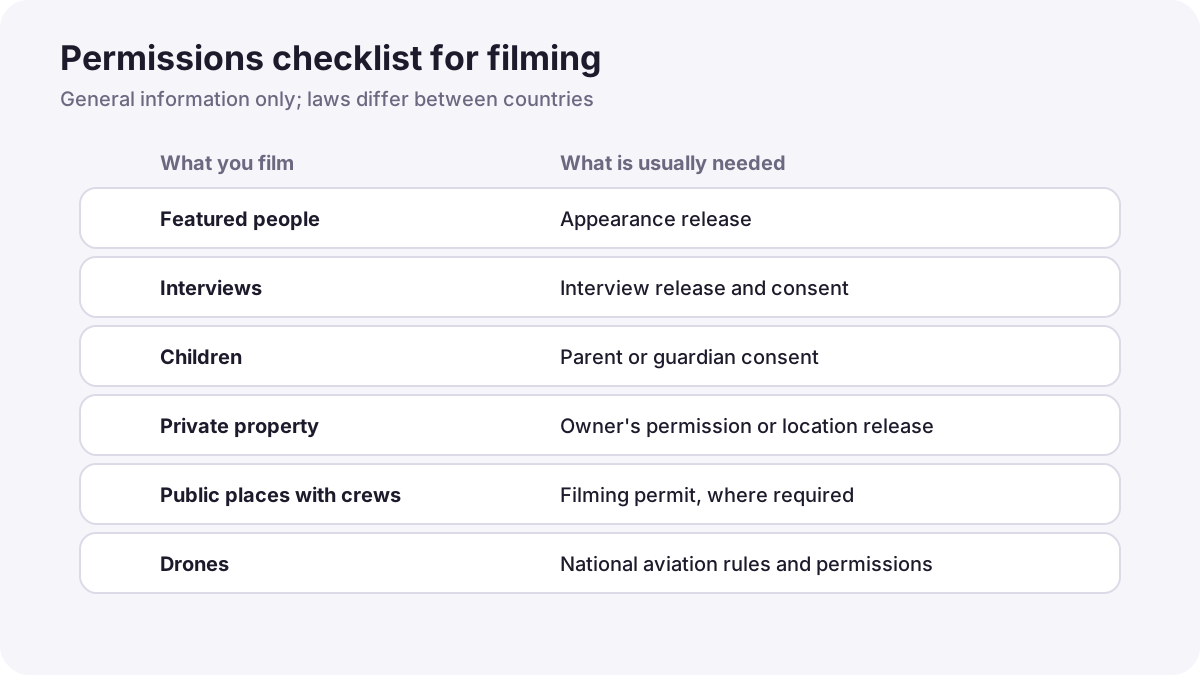
| Release | What it covers | When it is usually needed |
|---|---|---|
| Appearance or talent release | Permission to use a person's image, voice and performance | Adverts, brand films, featured people in documentaries |
| Interview release | Permission to record and use what a person says | Interviews and testimonials |
| Crowd or area notice | Signs telling people that filming is happening | Events and busy locations, where local law allows it |
| Minor's release | Signed by a parent or legal guardian | Any featured person under the legal age of adulthood |
Tip:A good release explains the project, how and where the video will be used, how long the permission lasts, and any payment. People should understand what they sign. Meaningful consent was explained in privacy and consent.
Recording voices
In many countries, recording a private conversation without the consent of the people speaking is restricted, and some require everyone's consent. Hidden recording is therefore risky. Clip microphones on people only with their knowledge, tell people when recording starts, and avoid recording private conversations you are not part of.
Filming places
- Public places: many places allow filming from public areas for personal use, but larger crews, tripods, lights or commercial work often need a filming permit from the local authority.
- Private property: shops, homes, offices and venues need the owner's permission and often a location release for commercial use.
- Restricted sites: airports, government buildings, military areas and some transport sites may forbid filming, as in property and location considerations.
- Artworks, logos and brands: recognizable logos, artworks or buildings in commercial videos may need clearance, as in commercial image rights.
Drones
Drone flights are regulated in most countries. Rules often include registration, operator training, height limits, no-fly zones near airports, and limits on flying over people. Commercial drone work may need extra permission. Always check the national aviation rules before flying, and respect people's privacy below the drone. Location safety was explained in weather, location and environmental risk.
Children and vulnerable people
Film children only with a parent's or guardian's consent, keep them safe and supervised, and think carefully before showing identifying details such as school names or home locations. Take extra care with people who may not fully understand consent. Safeguarding was explained in professional responsibility.
A permissions routine
- List everyone and every place that will appear clearly in the video.
- Check local rules for permits, voice recording, privacy and drones.
- Get written releases before or at the shoot, not afterward.
- Use clear signs at events where required.
- Store releases with the project and note which footage each one covers.
- Respect refusals: do not use footage of people who said no.
Common mistakes
- Filming first and asking later: people refuse and footage becomes unusable.
- Using event footage in an advert without releases: a legal and ethical risk.
- Recording private conversations secretly: may be illegal in many places.
- Flying drones without checking rules: fines, confiscation or danger.
- Losing release forms: you cannot prove permission later.
How productions manage permissions
Professional productions plan permissions in pre-production: location managers arrange permits and property releases, producers prepare appearance and interview releases, and crews use signs at public shoots. Releases are collected on the day, digitally or on paper, matched to footage, and stored in the project archive with music licences.
Practical examples
A café advert
- Situation
- You film a café advert with staff and customers.
- What to do
- You get a location release from the owner and appearance releases from everyone clearly visible, and keep other customers out of frame.
- Why it works
- Commercial use needs permission from people and the property owner.
- Result
- An advert the café can use without legal risk.
A city skyline by drone
- Situation
- A client wants drone shots over a busy park.
- What to do
- You check national drone rules and local permissions, and plan a route that avoids flying over people.
- Why it works
- Drone flights are regulated and flying over crowds is often restricted.
- Result
- Legal, safe aerial footage.
Key points
- Video records faces, movement and voices, so permissions matter even more than in photography.
- Use appearance, interview and minor's releases for featured people, especially in commercial work.
- Recording private conversations without consent is restricted in many countries.
- Private property needs owner permission; public filming may need a permit; drones are regulated.
- Check local rules, collect releases before filming, store them with the project and respect refusals.
Frequently asked questions
Do I need a release to film people in public?
What is an appearance release?
Do I need a permit to film in public?
Can I record a conversation without telling people?
Conclusion
Video permissions protect the people you film and your work: releases for featured people and voices, permission for places, permits and drone rules where needed, and careful records. You have now completed the copyright, ethics and safety course for both photography and video.
Finished reading? Track your progress through Copyright, ethics and safety.