A showreel, also called a demo reel, is a short video that shows the best of your work in a minute or two. For videographers, cinematographers, editors and colorists, it is the video version of a portfolio, and often the first thing a client or employer watches. A strong reel can win work in seconds; a weak one can lose it just as fast. This lesson explains how to choose shots for a reel, how long it should be, how to open and pace it, how to show your role, and how to tailor and share it.
What a showreel is
A showreel is a short edited video of your best shots and clips, designed to show your skills, style and range quickly. The principles of a portfolio, such as quality over quantity and tailoring to your audience, were explained in building a professional photography portfolio and selecting and curating photographs.
Choosing what goes in
- Only your strongest shots: one weak shot lowers the impression of the whole reel.
- Variety that fits your goal: different lighting, movement and subjects, but all in the type of work you want.
- Work you can repeat: show what clients will actually get from you.
- Your own work: only shots where you did the role you are presenting, such as camera, editing or color.
- Permission: check contracts and get client permission where needed, as in licensing and usage rights.
Length and structure
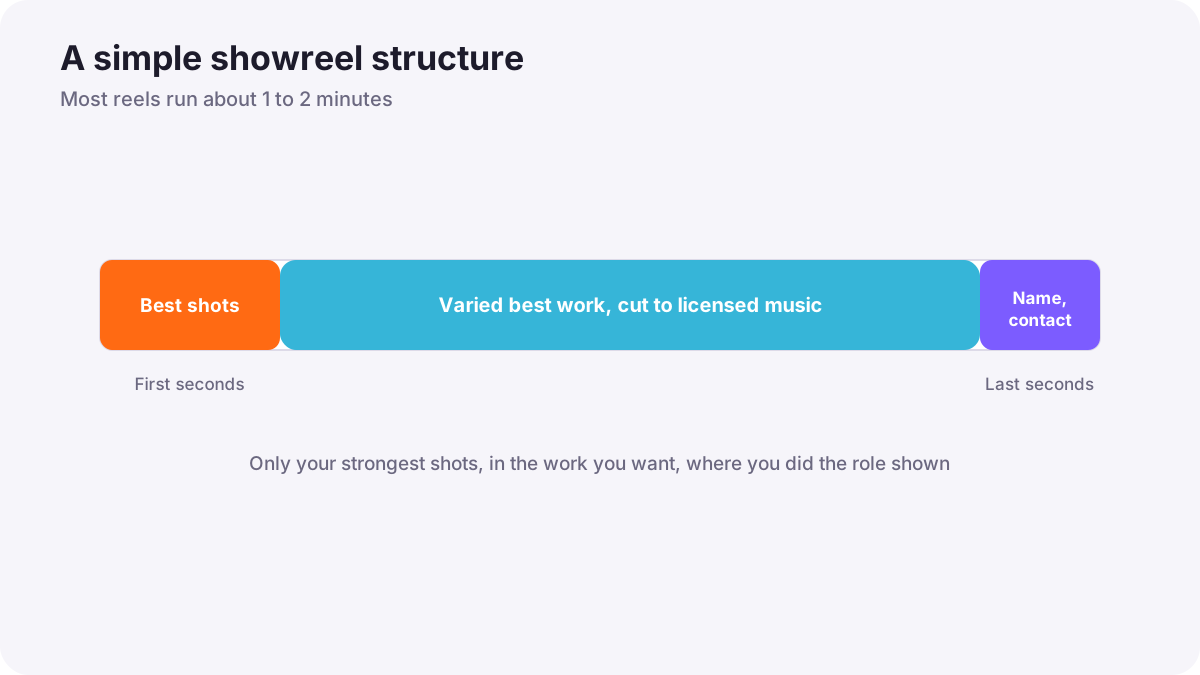
| Part | What to include | Length |
|---|---|---|
| Opening | Your strongest, most striking shots | First few seconds |
| Middle | A varied flow of best work, grouped by mood or rhythm | Most of the reel |
| Ending | Another strong shot, then your name, role and contact | Last few seconds |
Tip:Most showreels are about one to two minutes long. Viewers often decide in the first seconds, so start with your best work, not a long title or logo.
Editing and music
- Cut to the music: the rhythm of the music helps the reel feel energetic and professional; editing to the beat is explained in pacing and rhythm.
- Keep shots short: often a second or two each, longer for very beautiful or important moments.
- Use licensed music: as in music licensing for video.
- Show your specialty: editors can include short sequences that show storytelling; colorists can show before-and-after comparisons.
Tailored reels
One reel rarely fits every client. Many creators keep a main reel and shorter specialist reels, such as weddings, commercial, documentary or color grading. Each reel should match the kind of work that client wants to buy. Tailored portfolios were explained in building a professional photography portfolio.
Where to share your reel
- Your website: near the top of your homepage or services page, as in photography website structure.
- Video platforms: with a clear title, description and thumbnail, as in publishing video online.
- Social media: a short vertical cut-down, as in short-form vertical video for social media.
- Pitches and emails: a link, not a large file attachment.
Update your reel when you have new work that is better than your weakest shots, often once or twice a year.
Common mistakes
- Too long: viewers stop before the best parts.
- Long introductions: titles and logos delay the first impressive shot.
- Including average work to show range: it weakens the whole reel.
- Unclear role: clients cannot tell what you did.
- Unlicensed music: the reel is muted or removed.
How professionals use reels
Cinematographers, editors and colorists keep short, frequently updated reels that open with their strongest work and match the jobs they want. They make tailored versions for different clients, list their role clearly, and often add a few full projects or case studies on their website for clients who want to see more, as in portfolio structure and presentation.
Practical examples
A first reel that was too long
- Situation
- Your first reel lasts five minutes and includes every project.
- What to do
- You cut it to 90 seconds of your strongest shots, opening with the best one.
- Why it works
- Short reels with only top work make a stronger impression.
- Result
- Clients watch to the end and contact you.
Switching to weddings
- Situation
- You want more wedding clients, but your reel is mostly corporate interviews.
- What to do
- You make a separate wedding reel from your best wedding moments.
- Why it works
- A tailored reel shows clients exactly what they will get.
- Result
- More enquiries from couples.
Key points
- A showreel is a short video of your best work, the video version of a portfolio.
- Include only your strongest shots, in the kind of work you want, where you did the role shown.
- Most reels are about one to two minutes; open with your best shots.
- Edit to the rhythm of licensed music and end with your name, role and contact.
- Keep tailored reels for different clients and update them regularly.
Frequently asked questions
How long should a showreel be?
What should I put in my showreel?
Should my reel start with my logo?
How often should I update my showreel?
Conclusion
A strong showreel is short, opens with your best work, flows with licensed music, shows your role clearly and is tailored to the clients you want. You have now completed the portfolio and career course for both photography and video.
Finished reading? Track your progress through Portfolio and career.