Creators rarely depend on one source of income. Platform payments can change, sponsorships come and go, and the creators who last combine several streams. This lesson explains the main ways creators earn, typical requirements, the advantages and risks of each, and how photographers and filmmakers can use their skills to earn from their audience and beyond it.
The main income streams
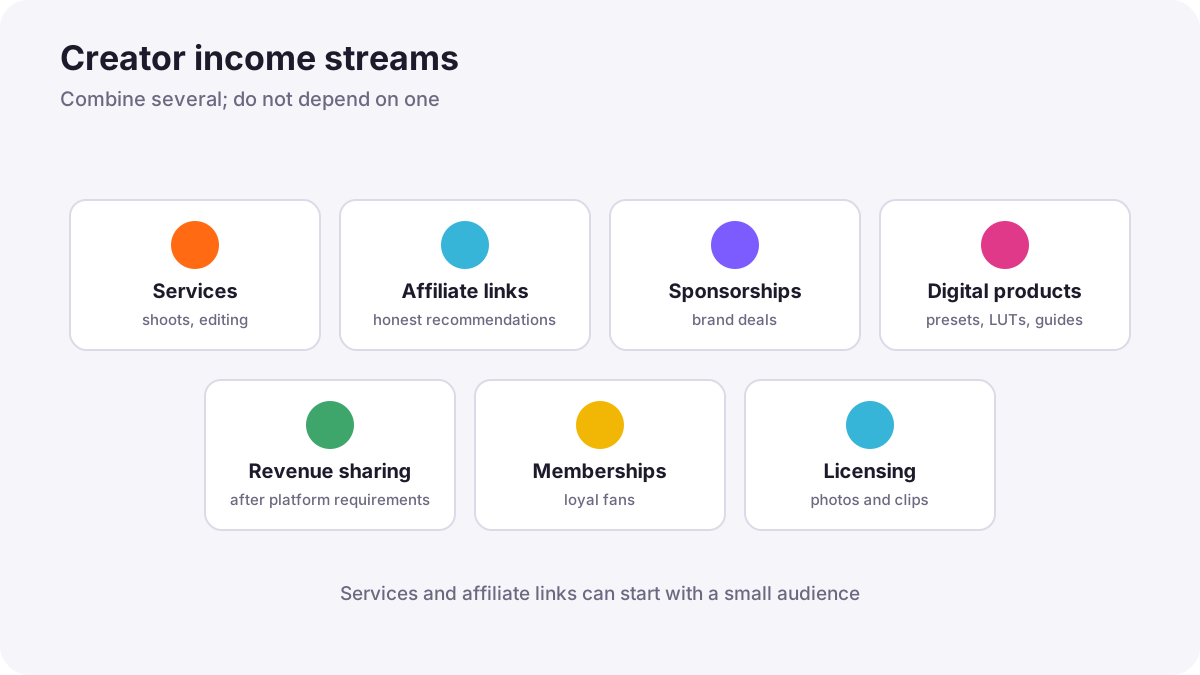
| Stream | How it works | Typical starting point |
|---|---|---|
| Platform revenue sharing | A share of ad or platform revenue | After meeting platform requirements |
| Sponsorships and brand deals | Brands pay for content featuring their product | A clear niche and engaged audience |
| Affiliate links | Commission when viewers buy through your link | Honest product recommendations |
| Digital products | Presets, LUTs, guides, courses, templates | Audience trust in your style |
| Services | Photography, video or editing for clients | Portfolio from your content |
| Memberships and tips | Fans support you monthly or per video | A loyal community |
| Licensing | Selling usage of your photos or clips | High-quality original work |
Platform revenue sharing
Platforms share revenue with creators who meet their requirements. For example, at the time of writing YouTube's Partner Program had an early tier starting at 500 subscribers with watch-hour or Shorts-view requirements, and full ad revenue sharing at 1,000 subscribers plus 4,000 public watch hours in 12 months or 10 million Shorts views in 90 days. Reports say higher thresholds are planned for new applicants from 2027, so always check the platform's official pages.
Remember:Revenue per view varies widely by niche, audience location and season. Treat platform income as one stream, not your only plan.
Using your creative skills
Photographers and filmmakers have an advantage: their content is also a portfolio. Viewers who like your work may hire you for shoots, editing or brand content, as in working with brands: media kits, rates and disclosure and pricing photography services. Digital products such as presets and LUTs grow from the look your audience already likes.
Combining streams over time
- Start with services and affiliate links that suit even a small audience.
- Add sponsorships once your niche and engagement are clear.
- Create a digital product from your most requested help.
- Join revenue sharing programs when you qualify.
- Review income yearly, as in building a sustainable photography business.
Remember:Many countries require you to declare creator income for tax, and minors usually need a parent or guardian to manage accounts and payments. Rules differ, so check local requirements.
Common mistakes
- Depending on one platform: income can change overnight.
- Promoting products you do not trust: you lose your audience's trust.
- Hiding paid promotions: breaks platform rules and advertising laws.
- Selling too early: build trust and value first.
How professional creators earn
Professional creators build several income streams that fit their niche, recommend only what they trust, disclose every paid relationship, keep records for tax and treat their channel as a business that serves both audience and clients.
Practical examples
A small photography channel
- Situation
- Your channel has 2,000 followers but no income.
- What to do
- You offer local portrait sessions and add affiliate links for gear you actually use.
- Why it works
- Services and honest affiliate links work with smaller audiences.
- Result
- Your first regular income from your content.
A popular editing look
- Situation
- Viewers keep asking for your color style.
- What to do
- You create a preset pack with a guide explaining how to adjust it.
- Why it works
- A digital product solves a real request.
- Result
- Income that continues after each sale is set up.
Key points
- Creators earn from revenue sharing, sponsorships, affiliates, digital products, services, memberships and licensing.
- Platform requirements and payments change; check official pages and do not depend on one platform.
- Photographers and filmmakers can turn content into client work and digital products.
- Disclose paid relationships, recommend only what you trust, and handle tax and guardian requirements.
Frequently asked questions
How many subscribers do you need to make money on YouTube?
What is affiliate marketing?
What digital products can photographers sell?
Can small creators earn money?
Conclusion
Lasting creator income comes from several streams built on trust. Next, you will learn to work professionally with brands.
Finished reading? Track your progress through Content creation.