YouTube is both a video platform and a search engine. People come to learn, be entertained and decide what to buy, and they choose what to click from a title and a thumbnail. This lesson explains how to choose ideas people want, how to package a video so it gets clicked, how to structure longer videos so people keep watching, and how to guide viewers to your next video.
Choosing ideas people want
- Search ideas: answer questions people type, such as "how to take night photos on a phone".
- Interest ideas: stories, challenges and reviews people click because they are curious.
- Check demand: search suggestions, popular videos in your niche and your audience's comments.
- Add your angle: what can you show that others have not?
Packaging: title and thumbnail first
Many experienced creators write the title and design the thumbnail before filming, because if the idea cannot be packaged clearly, it is hard for viewers to choose it. Thumbnail and title technical details are covered in publishing video online.
| Element | Good practice |
|---|---|
| Title | Clear benefit or curiosity in simple words; honest |
| Thumbnail | One main subject, strong contrast, readable at small size, few words |
| Together | Title and thumbnail add to each other instead of repeating |
A structure for longer videos
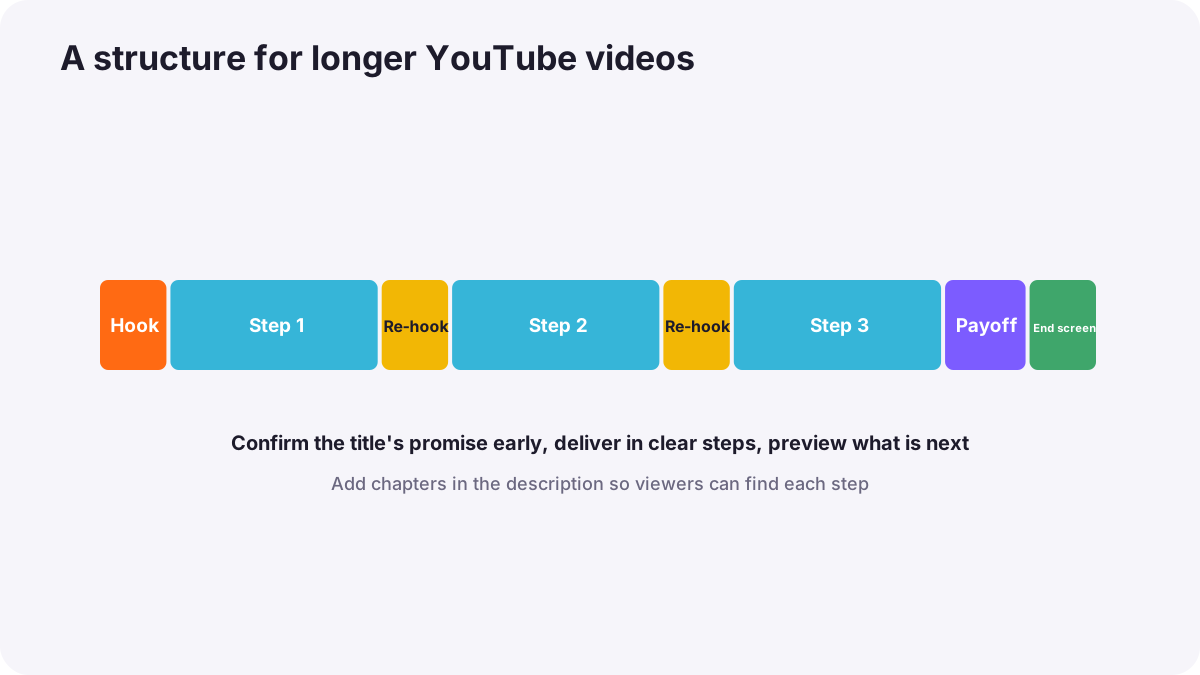
- Hook (first 15 to 30 seconds): confirm the title's promise and show what is coming.
- Main content in clear steps: one idea at a time.
- Re-hooks: short previews of what is next, every few minutes.
- Payoff: the result, final tip or answer.
- End screen: point to one relevant next video.
Tip:Add chapters with timestamps in the description so viewers can find sections, as in publishing video online.
Reading viewer behavior
Two numbers matter most at first: how often people who see your thumbnail click it (click-through rate) and how long they watch (retention). A good title and thumbnail with low retention usually means the video did not deliver what the packaging promised. Analytics are explained in analytics that matter and testing ideas.
Common mistakes
- Long introductions: viewers leave before the content starts.
- Unreadable thumbnails: too much text or clutter.
- Misleading titles: clicks without watch time.
- No structure: viewers lose track and leave.
- Using music without a licence: claims or muted audio, as in music licensing for video.
How successful YouTubers work
Successful YouTube creators plan ideas around both search and curiosity, design packaging early, script openings, structure videos in clear steps with re-hooks, and study retention graphs to see where viewers leave.
Practical examples
A gear review
- Situation
- Your review gets clicks but people leave in the first minute.
- What to do
- You open with the final verdict and best sample footage, then explain.
- Why it works
- Delivering the promise early builds trust and curiosity.
- Result
- Better retention through the whole video.
A tutorial
- Situation
- Your editing tutorial is a long, unstructured recording.
- What to do
- You split it into five clear steps with chapters and short previews.
- Why it works
- Structure helps viewers follow and find what they need.
- Result
- Longer viewing and more positive comments.
Key points
- Choose search ideas and curiosity ideas that your audience wants.
- Plan the title and thumbnail early; keep them clear and honest.
- Structure longer videos: hook, clear steps, re-hooks, payoff and an end screen.
- Click-through rate and retention show whether packaging and content work together.
Frequently asked questions
How do I get more views on YouTube?
Should I make the thumbnail first?
How long should YouTube videos be?
What are re-hooks?
Conclusion
Clear ideas, honest packaging and strong structure make YouTube videos people choose and finish. Next, you will learn the short-form workflow for Reels, Shorts and TikTok.
Finished reading? Track your progress through Content creation.