A content creator makes photos, videos, posts or audio that an audience chooses to follow, and often earns money from it. Behind every successful channel are the same skills this Academy teaches: light, composition, sound, editing and storytelling, plus planning, consistency and understanding an audience. This lesson explains what creators actually do, the main formats and platforms, how creators earn, and a realistic way to start.
What a creator is
A content creator publishes work regularly for an audience on platforms such as YouTube, Instagram, TikTok, blogs or podcasts. Unlike a client photographer, who makes images for one customer, a creator builds an audience that returns for more. Many creators combine both: they publish their own content and also make content for brands and businesses.
Remember:The wider world of creators, platforms, brands and tools is often called the creator economy.
The jobs inside one channel
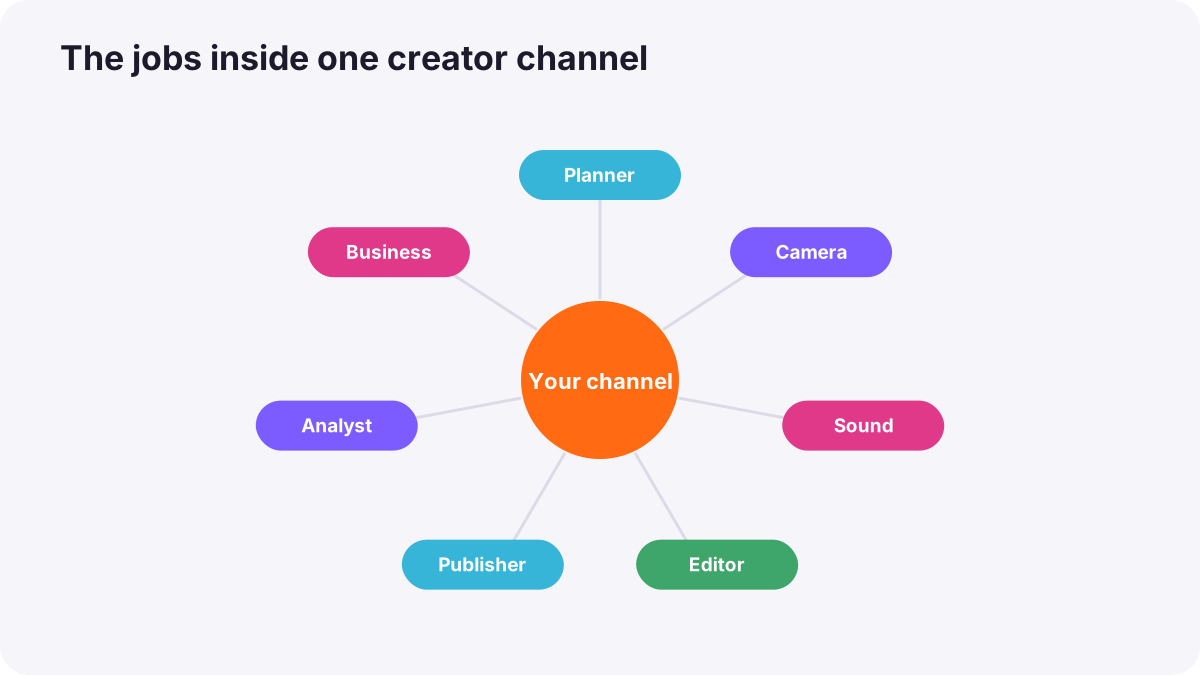
| Role | What it involves | Where to learn it |
|---|---|---|
| Planner | Ideas, research, scripts and schedules | Lesson 3 of this course |
| Camera operator | Exposure, focus, composition, light | Stages 1 and 2 |
| Sound recordist | Clear voice and audio | recording clean dialogue |
| Editor | Story, pacing, captions, graphics | pacing and rhythm |
| Publisher | Titles, thumbnails, captions, timing | publishing video online |
| Analyst | Reading results and improving | Lesson 9 of this course |
| Business owner | Brand deals, pricing, contracts | Lessons 11 and 12 |
Formats and platforms
- Long-form video: tutorials, reviews, vlogs and documentaries, mainly on YouTube.
- Short-form video: vertical clips on Reels, Shorts and TikTok, as in short-form vertical video for social media.
- Photo posts and carousels: single images or swipeable sets on Instagram and similar platforms.
- Live streams: real-time video with audience chat.
- Written and audio content: blogs, newsletters and podcasts that support visual work.
Tip:Platforms, features and rules change often. The skills of storytelling, quality and understanding people stay valuable on every platform.
How creators earn
Creators earn from several sources: platform revenue sharing, brand sponsorships, affiliate links, their own products and courses, client services and memberships. Most income arrives after an audience trusts you, and most successful creators combine several sources. These are explained in earning money as a creator.
A realistic way to start
- Choose a topic you can make 50 posts about without running out of ideas.
- Pick one main platform and one format to learn first.
- Publish regularly for three months, treating every post as practice.
- Review what worked and improve one thing each time.
- Add a second platform only when the first feels manageable.
Remember:Under-13s are not allowed to have their own accounts on most major platforms, and many features have higher age limits. Young creators should work with a parent or guardian, as in staying safe and healthy as a creator.
Common mistakes
- Starting on every platform at once: burnout and weak results everywhere.
- Copying others exactly: no reason for people to follow you.
- Quitting after a few posts: growth usually takes months.
- Ignoring sound and light: low-quality posts are skipped quickly.
- Measuring only followers: trust and engagement matter more.
How successful creators work
Successful creators treat their channel like a small media business. They plan content, keep a regular schedule, study their results, improve their craft steadily and build income from several sources.
Practical examples
A cooking channel
- Situation
- A teenager loves cooking and wants to start a channel with a parent's help.
- What to do
- They choose short recipe videos on one platform, filmed by window light with a phone.
- Why it works
- One clear topic and one format are manageable and repeatable.
- Result
- A growing library of videos and steadily improving skills.
A photographer's channel
- Situation
- A wedding photographer wants more clients.
- What to do
- They post weekly behind-the-scenes clips and couple tips.
- Why it works
- Helpful content builds trust with future clients.
- Result
- More enquiries from people who already know their style.
Key points
- A creator builds an audience that chooses to return, often earning from several sources.
- One channel combines the jobs of planner, camera operator, sound recordist, editor, publisher, analyst and business owner.
- Main formats are long-form video, short-form video, photo posts, live streams and supporting written or audio content.
- Start with one topic, one platform and one format, and publish regularly for months.
Frequently asked questions
What does a content creator do?
Do I need expensive equipment?
How long does it take to grow?
Can kids be content creators?
Conclusion
Creating content combines every skill in this Academy with planning and understanding people. Next, you will choose a niche and an audience to create for.
Finished reading? Track your progress through Content creation.