Good videos are usually won or lost before the camera is switched on. A clear plan means the right people, equipment and locations are ready, every important shot is filmed, and the editor receives everything needed to finish the story. Without one, shoot days run late, sound is forgotten and key moments are missed. This lesson walks through the whole planning process of a video production, from the first idea and script to the budget, crew, schedule, shoot day and handover to editing.
The three stages of production
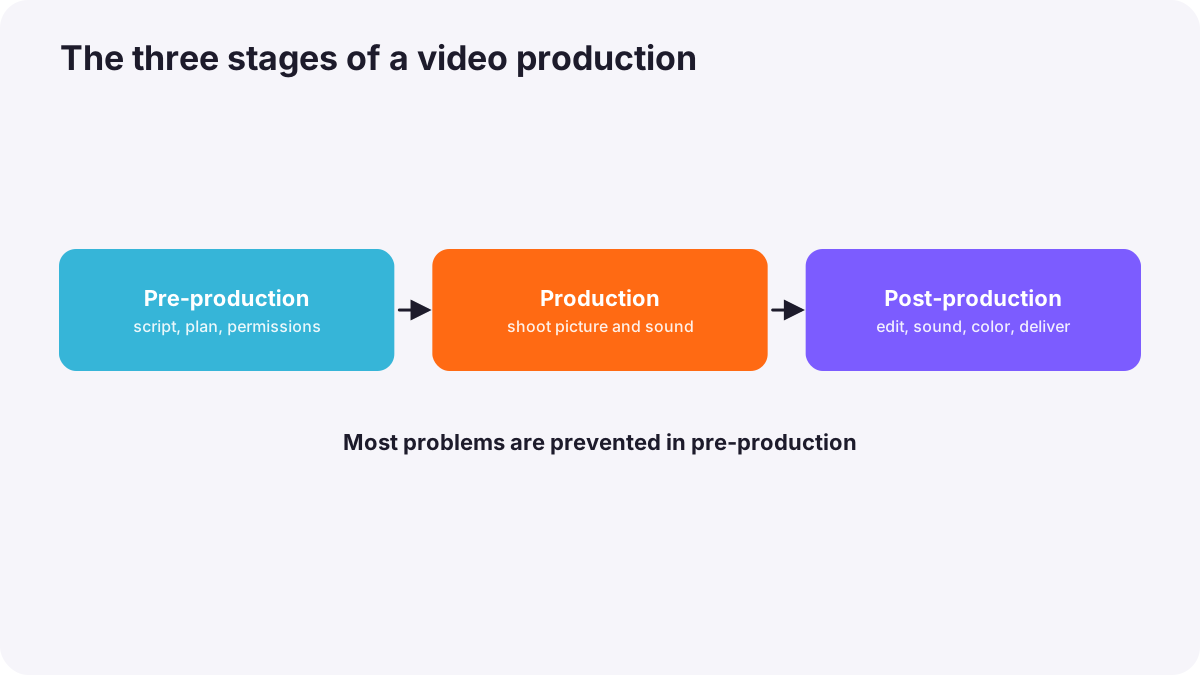
| Stage | Main work |
|---|---|
| Pre-production | Idea, script, storyboard, budget, crew, locations, permissions, schedule |
| Production | The shoot days: filming picture and sound |
| Post-production | Editing, sound, color, titles, revisions and delivery |
Planning photography projects, including the brief, research and preproduction, was explained in planning a photography project and preproduction and logistics. Video follows the same method with more people, more equipment and the extra needs of sound and editing.
From idea to script
- Write the brief: goal, audience, key message, length, deliverables and deadline, as in planning a photography project.
- Develop the idea: a one-sentence summary of what the video is about.
- Write a script or outline: a full script for planned dialogue, or an outline of questions and scenes for documentaries, as in writing a simple script.
- Plan the visuals: storyboards and floor plans, as in storyboards and shot planning.
- Get approval from the client or team before booking anything.
Budget, crew and equipment
- Budget: every stage and cost, as in pricing video services.
- Crew: decide who does camera, sound, lighting, directing and production. On small shoots one person may do several roles, as in working with a small crew.
- Equipment list: cameras, lenses, sound, lighting, stabilizers, batteries, cards, drives and spares.
- Cast and contributors: actors, presenters or interviewees, with releases, as in filming people and places.
Locations and permissions
- Scout locations in person or virtually, as in research and visual references: light, noise, power, space, parking and access.
- Listen as well as look: traffic, air conditioning or nearby building work can ruin sound.
- Arrange permissions, permits and releases in advance.
- Plan safety with a risk assessment, as in risk assessment and contingency planning.
Schedule and call sheet
The shoot schedule groups shots by location and setup rather than story order, so the crew does not keep moving lights and cameras. Plan the most important shots early in the day, leave time for setup and lighting changes, and keep a buffer for delays. The day before, send a call sheet with times, addresses, contacts, weather, the schedule and safety information, as explained in scheduling and assignment management.
Tip:Setups take longer than most beginners expect. A new lighting setup can easily take 30 to 60 minutes. Schedule fewer, better setups rather than too many rushed ones.
The shoot day
- Arrive early and check equipment, power and sound.
- Hold a short briefing so everyone knows the plan and safety points.
- Rehearse each scene before recording.
- Mark takes and log good ones for the editor.
- Record room tone and B-roll at every location, as in room tone, ambience and wild sound.
- Offload and back up footage the same day, as in offloading and backing up video footage.
- Wrap carefully: pack equipment and leave locations as you found them.
Handing over to post-production
Give the editor organized footage, sound files, logs or notes of the best takes, the script and storyboard, music and logo files, and the deliverables list. A clean handover saves days of searching. Organizing a project for editing is explained in organizing footage and setting up a project.
Common mistakes
- Booking a shoot before the script is approved: costly changes later.
- Scheduling in story order: hours lost moving equipment.
- Ignoring sound when scouting: noisy locations ruin dialogue.
- No buffer time: the last important shots are rushed.
- Not offloading the same day: footage is at risk.
How producers plan productions
Producers and assistant directors plan productions in detail: approved scripts and storyboards, line-by-line budgets, booked crew and equipment, scouted and cleared locations, safety plans, and schedules grouped by setup. Shoot days start with a briefing and follow the call sheet, footage is backed up daily, and post-production receives an organized handover.
Practical examples
A company profile film
- Situation
- A small company wants a three-minute film about its team.
- What to do
- You write an outline, storyboard key shots, scout the office for sound, schedule interviews and B-roll by room, and send a call sheet.
- Why it works
- Clear planning makes a one-day shoot efficient and complete.
- Result
- All interviews and B-roll filmed in one day, ready for editing.
A noisy location
- Situation
- During scouting, you notice loud air conditioning in the interview room.
- What to do
- You arrange for it to be switched off during takes and choose a quieter backup room.
- Why it works
- Sound problems are easier to prevent than fix.
- Result
- Clean interview sound on the day.
Key points
- Video production has three stages: pre-production, production and post-production.
- Start with an approved brief and script or outline, then storyboards and floor plans.
- Plan budget, crew, equipment, cast, locations, permissions and safety in advance.
- Schedule by location and setup, with buffers, and send a call sheet the day before.
- On shoot day, brief, rehearse, log takes, record room tone, back up footage and hand over clearly.
Frequently asked questions
What are the stages of video production?
What should a video pre-production checklist include?
Why are films not shot in story order?
What is a call sheet?
Conclusion
Planning turns a video idea into a smooth shoot: an approved script and storyboard, a realistic budget and crew, scouted and cleared locations, a schedule grouped by setup, a clear call sheet and an organized handover. You have now completed the projects and critique course for both photography and video.
Finished reading? Track your progress through Projects and critique.