Making a short film brings together everything in this Academy: story, light, camera, sound, editing, color and working with people. A first short film does not need a big budget; it needs a small, clear idea and careful planning. Finishing a modest film teaches more than starting an ambitious one that never ends. This lesson walks through a complete short film project in clear stages, from choosing an idea you can actually make, through the shoot and post-production, to sharing the finished film with an audience.
What a short film is
A short film is a complete story told in a short running time, often from a couple of minutes to about 20 minutes. Many filmmakers make shorts to learn, to show their skills and to build toward longer work. The production stages were explained in planning a video production.
Stage 1: an idea you can make
- Few locations: one or two places you can access easily.
- Few characters: one to three people.
- A clear story: a character, a goal, a conflict and a change, as in story structure for short videos.
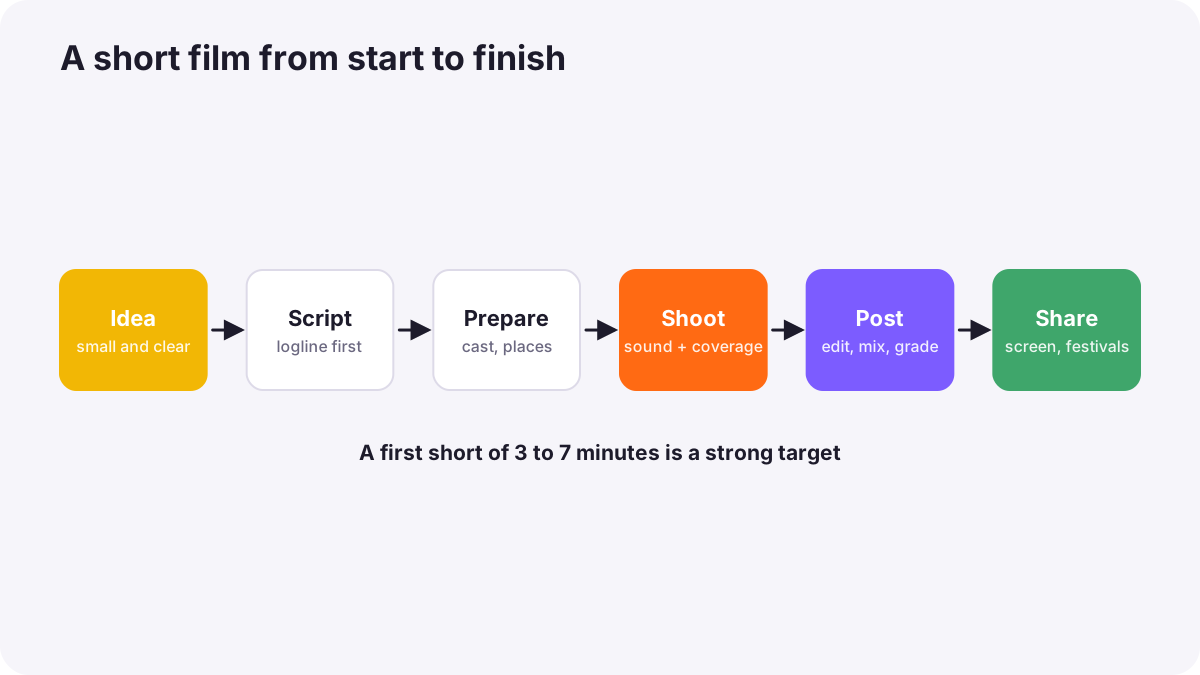
- Short length: 3 to 7 minutes is a strong target for a first film.
- Use what you have: places, people, objects and skills around you.
Tip:Write your logline first. If you cannot describe the film in one clear sentence, the idea is not ready yet, as in writing a simple script.
Stage 2: development and pre-production
- Write and rewrite the script, then hold a table read.
- Make a simple budget for food, travel, props, equipment rental, music and festival fees.
- Cast performers and agree terms, as in working with a small crew.
- Scout locations for light, sound and permission, as in filming people and places.
- Storyboard and plan coverage, as in coverage: shooting a scene for the edit.
- Schedule by location and send call sheets.
Stage 3: the shoot
- Brief the team each morning, including safety.
- Block and rehearse, as in blocking actors and camera.
- Film the master first, then coverage, protecting key moments.
- Record clean sound and room tone, as in recording clean dialogue on location.
- Back up footage every day.
- Thank everyone and keep morale high.
Stage 4: post-production
| Step | Lesson |
|---|---|
| Organize and sync | organizing footage and setting up a project |
| Rough cut and feedback | building the rough cut |
| Fine cut and picture lock | reviewing and finishing an edit |
| Sound design and mix | basic audio editing and mixing |
| Color grading | color correction and color grading in video |
| Titles, credits, captions and export | exporting and delivery settings |
Stage 5: sharing your film
- Screen it for an audience and watch their reactions, as in reviewing and improving your films.
- Film festivals: many festivals around the world accept short films; read each festival's rules on length, premiere status, formats and fees before submitting.
- Online: publish with a strong thumbnail, title, description and captions, as in publishing video online.
- Showreel and portfolio: use the best moments, as in building a showreel.
- Rights: confirm music, releases and permissions before public screening.
Warning:Some festivals require that a film has not been published online before. Check festival rules before uploading your film publicly.
Common mistakes
- An idea too big for the budget: the film is never finished.
- Poor sound: audiences stop caring, however good the picture.
- Too little coverage: the edit cannot work.
- Unlicensed music: festivals and platforms reject the film.
- Never finishing: endless polishing instead of completing and learning.
How filmmakers grow through shorts
Many well-known filmmakers began with short films made with friends and small budgets. They chose ideas they could execute, planned carefully, protected sound and performances, finished their films, showed them to audiences and festivals, learned from the reactions, and then made the next film better. Finishing is the most important skill.
Practical examples
A 5-minute first film
- Situation
- You want to make your first short film with friends and no budget.
- What to do
- You write a two-character story set in one kitchen, film over one weekend and edit for two weeks.
- Why it works
- A small, clear idea can be finished well.
- Result
- A complete film you can show and learn from.
A festival plan
- Situation
- You want to send your short to festivals and also share it online.
- What to do
- You check each festival's premiere rules and delay the public upload until the festival run ends.
- Why it works
- Some festivals only accept films not yet published.
- Result
- Your film stays eligible for the festivals you chose.
Key points
- A short film is a complete story told briefly; finishing a small film teaches the most.
- Choose an idea with few locations and characters, a clear story and a short length.
- Plan the script, budget, cast, locations, coverage and schedule carefully.
- Shoot with good sound, coverage and daily backups; finish with edit, sound, color and export.
- Share through screenings, festivals and online, after checking rights and festival rules.
Frequently asked questions
How do I make my first short film?
How long should a first short film be?
Do I need a big budget for a short film?
Can I put my short film online and send it to festivals?
Conclusion
Making a short film brings every skill together: a small clear idea, careful planning, a focused shoot, complete post-production and thoughtful sharing. Finish it, show it, learn and make the next one. In the final lesson, you will learn how to review and improve your films.
Finished reading? Track your progress through Directing and filmmaking.