Freelance marketplaces connect creatives with clients around the world. They can bring your first international jobs, especially for editing, retouching and remote services, but they also have fees, competition and scams. This lesson explains how marketplaces work, what they charge, how to build a profile and write proposals that win, how to stay safe and how to grow beyond them.
How marketplaces work
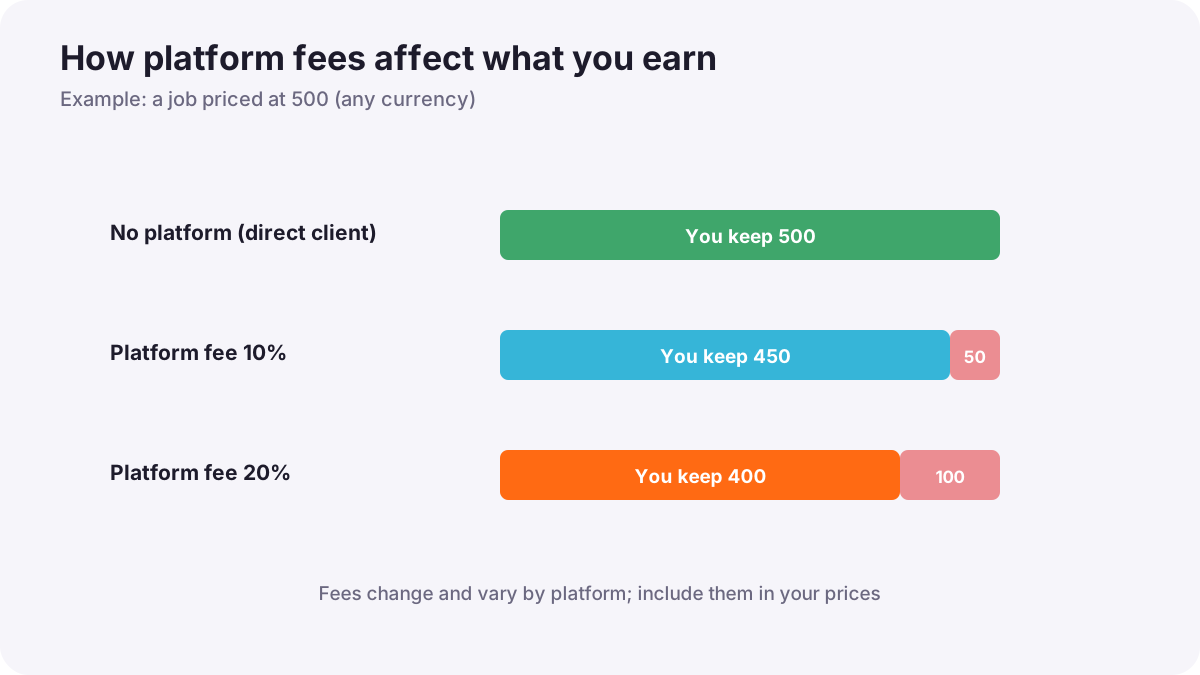
On proposal-based platforms, clients post jobs and freelancers send proposals. On package-based platforms, freelancers list fixed services, sometimes called gigs, that clients buy directly. Both handle payment and reviews, and both charge fees. For example, at the time of writing Upwork charged freelancers a variable service fee of 0 to 15% per contract and Fiverr a flat 20% on seller earnings. Fees change, so check each platform's current terms.
Tip:Include platform fees in your prices so your take-home income still covers your costs.
A profile that wins
- A clear title: "Product photo retoucher for e-commerce brands" beats "Creative person".
- A friendly, professional photo.
- A short overview focused on the client's results, not only your gear.
- Portfolio samples that match the services you sell.
- Clear packages with what is included and delivery time.
Writing proposals
- Read the job carefully and reply to the details, not with a copied message.
- Open with the client's goal and how you will achieve it.
- Show one or two relevant examples.
- Ask one smart question that proves you understand the job.
- State price, timeline and revisions clearly.
Staying safe
- Keep payment and communication on the platform until you trust the client; moving off-platform early is a common scam.
- Never pay to receive a job or buy equipment from a "client".
- Use milestones or escrow for larger projects.
- Deliver previews with watermarks or low resolution until payment, where appropriate.
Remember:Young freelancers should not create marketplace accounts without meeting the platform's age rules and involving a parent or guardian.
Growing beyond marketplaces
Good reviews build reputation quickly, but fees reduce your income. Many freelancers use marketplaces to start, then build direct clients through referrals, a website and content, as in photography website structure. Follow each platform's rules about moving clients off the platform.
Common mistakes
- Copy-paste proposals: clients ignore them.
- Pricing far too low: fees and revisions leave almost nothing.
- Unclear revision limits: endless changes.
- Accepting off-platform payment from strangers: scams.
How successful freelancers use platforms
Successful marketplace freelancers specialize, write personal proposals, deliver fast with clear communication, collect strong reviews, include fees in prices and gradually build direct relationships outside the platform where rules allow.
Practical examples
A winning proposal
- Situation
- A brand needs 50 product photos retouched.
- What to do
- You reply with a before-and-after of a similar product, a question about background color and a clear price and delivery time.
- Why it works
- A relevant, specific proposal stands out.
- Result
- You win the job and a repeat client.
A scam avoided
- Situation
- A new client asks you to move to a messaging app and pay for software first.
- What to do
- You decline and report the account.
- Why it works
- Requests to pay or leave the platform early are common scam signs.
- Result
- Your money and account stay safe.
Key points
- Marketplaces are proposal-based or package-based, and all charge fees that change over time.
- Build a specific profile with relevant samples and clear packages.
- Write personal proposals focused on the client's goal.
- Stay on-platform with new clients, never pay to get work, and use milestones.
- Use platforms to start and build direct clients over time.
Frequently asked questions
Which freelance platform is best for photographers and editors?
How much do freelance platforms charge?
How do I write a good proposal?
How do I avoid scams?
Conclusion
Marketplaces can start a freelance career when you use them wisely. Next, you will explore remote post-production work.
Finished reading? Track your progress through Freelancing and careers.