Getting a job is the start, not the finish. The first months shape your reputation, your skills and the opportunities that follow. This lesson explains how to become someone colleagues trust, how to learn quickly from senior people, how to use feedback, when to ask for more responsibility, how to choose a specialization and how to plan your next step, whether that is promotion or freelancing.
The first 90 days
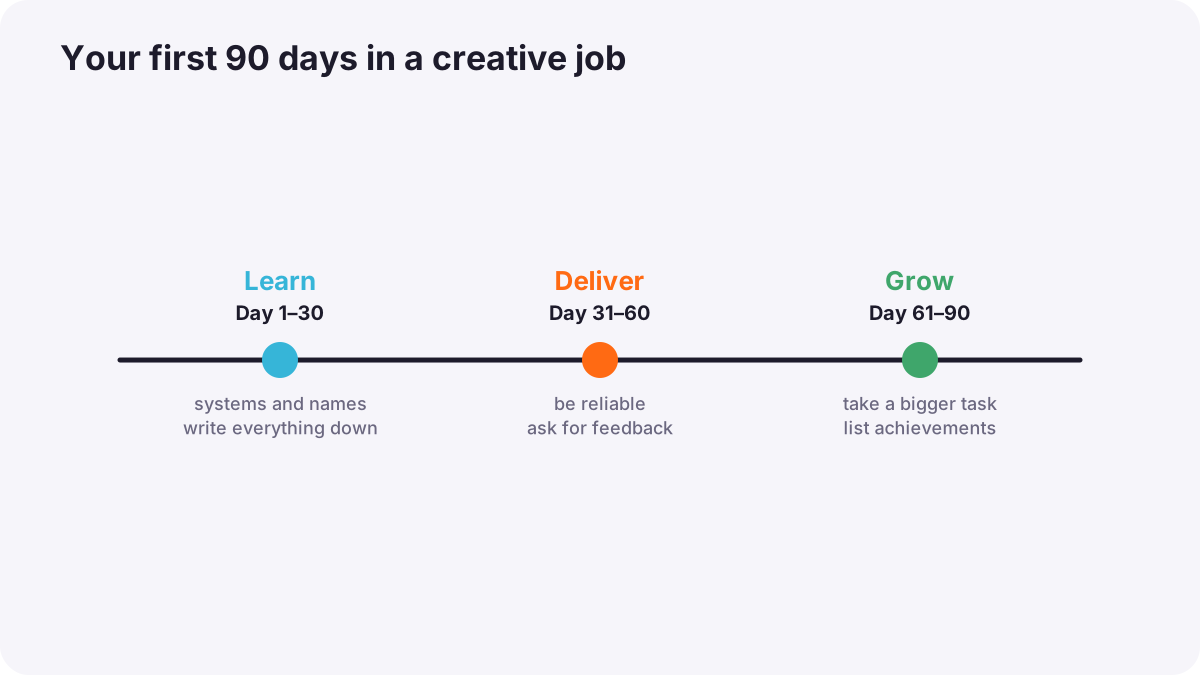
- Learn the systems: file naming, folders, schedules and who decides what.
- Be reliable: on time, prepared and finishing what you start.
- Write things down so you never need the same explanation twice.
- Watch how seniors work and ask good questions at good moments.
- Ask for feedback after a few weeks.
Using feedback well
Feedback is information, not an attack. Listen fully, ask one clarifying question, thank the person and show improvement next time. The same habits help you review your own work, as in reviewing and improving your films.
Growing your role
- Volunteer for tasks slightly above your level when you are ready.
- Solve problems before reporting them, and suggest a solution when you do.
- Keep a list of achievements for reviews and future applications.
- Ask for responsibility or promotion with examples of what you already handle well.
Specializing and planning ahead
Over time, many people become known for one strength: lighting, color, sound, product work or managing productions. Specialists are often paid more and recommended more. Every year, review your skills, income and goals, then decide whether to grow where you are, move to another company or start freelancing, as in career paths: freelancer, business owner or employee.
Remember:If you plan to freelance later, keep good relationships and follow your contract's rules about clients and confidentiality.
Common mistakes
- Pretending to understand: costly mistakes later.
- Taking feedback personally: slower growth.
- Waiting to be noticed: ask for opportunities with evidence.
- Burning bridges when leaving: a small industry remembers.
How careers grow
People who grow fastest are reliable, curious and easy to work with. They learn from everyone, welcome feedback, build a specialty, track their achievements and plan each next step deliberately.
Practical examples
From assistant to editor
- Situation
- You are an assistant editor organizing footage.
- What to do
- You master the workflow, then offer to cut small social versions in your spare time.
- Why it works
- Showing ability above your level earns trust.
- Result
- You are given your first editing projects.
Handling a tough note
- Situation
- A senior photographer says your lighting setups are too slow.
- What to do
- You thank them, ask which steps to speed up and practise a quicker routine.
- Why it works
- Using feedback quickly shows professionalism.
- Result
- Faster setups and more responsibility.
Key points
- In the first months, learn systems, be reliable, write things down and ask for feedback.
- Treat feedback as information and show improvement.
- Grow your role by volunteering, solving problems and keeping a list of achievements.
- Build a specialty and review your career path every year.
Frequently asked questions
How do I impress in my first creative job?
How do I ask for a promotion?
Should I specialize?
Can I freelance after working at an agency?
Conclusion
Reliability, learning and clear goals turn a first job into a career. Next, you will learn to manage money as a creative professional.
Finished reading? Track your progress through Freelancing and careers.