A freelancer earns only for the hours they personally work. Growing into a studio or agency means other people help deliver work under your brand, so the business can take larger jobs and earn beyond your own time. This lesson explains when to grow, how to work with assistants, second shooters and subcontractors, how to keep quality consistent, and how to win the bigger clients that a team can serve.
When to grow
- You regularly turn down work because you are fully booked.
- Clients ask for larger projects than one person can deliver.
- Editing or admin fills time you could spend winning and shooting work.
- Your systems are written down, so others can follow them.
Ways to add help
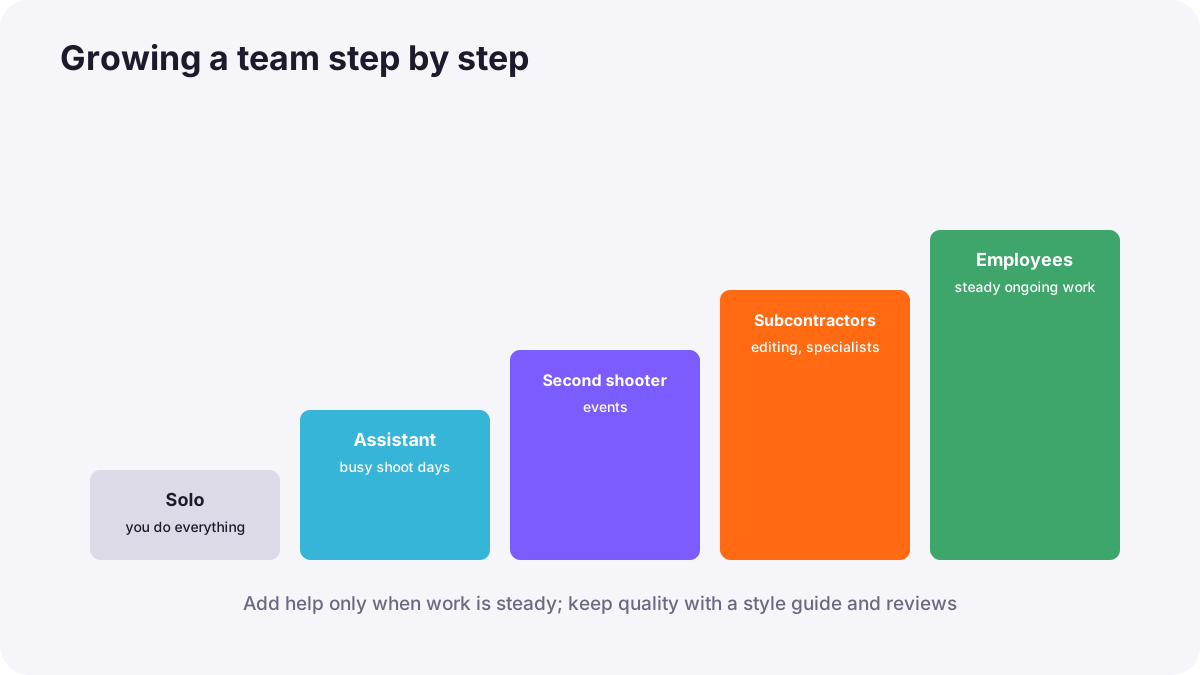
| Help | Role | Start with |
|---|---|---|
| Assistant | Carries, sets up lights, manages files | Busy shoot days |
| Second shooter | Covers extra angles at events | Weddings and large events |
| Subcontracted editor or retoucher | Edits in your style | Your busiest season |
| Specialists | Drone, sound, makeup, producer | Larger projects |
| Employees | Ongoing roles | When work is steady |
Remember:Working with others needs clear agreements on pay, credit, usage and confidentiality, as in networking and collaboration.
Keeping quality consistent
- Write a style guide: examples of your look, framing and editing.
- Use checklists for shoot days and deliveries.
- Review every delivery before it reaches the client.
- Train and give feedback regularly.
- Pay fairly and on time so good people stay.
Winning bigger clients
A team can serve companies, agencies and institutions that need reliable, larger and repeated work. These clients expect professional proposals, clear contracts, insurance and production planning, as in planning a video production. Your portfolio should then show complete projects and results, not only beautiful images.
Common mistakes
- Hiring before work is steady: costs without income.
- No style guide: inconsistent results under your name.
- Unclear agreements with helpers: disputes about pay and rights.
- Becoming only a manager without wanting to: choose growth that suits you.
How studios and agencies grow
Growing studios add help step by step, write their style and systems down, review quality, treat collaborators fairly and move toward larger, repeat clients. Some owners choose to stay small and premium instead, which is also a valid path.
Practical examples
A wedding studio
- Situation
- You turn down twenty weddings a year.
- What to do
- You train two associate photographers in your style and review their galleries.
- Why it works
- A team multiplies the bookings you can accept.
- Result
- More weddings under your brand with consistent quality.
A small video agency
- Situation
- A company asks for twelve videos a year.
- What to do
- You bring in a freelance editor and sound recordist with written agreements.
- Why it works
- A team can deliver larger, regular work.
- Result
- A long-term corporate client.
Key points
- Grow when you regularly turn work away and your systems are written down.
- Add help step by step: assistants, second shooters, subcontractors, specialists, then employees.
- Keep quality consistent with style guides, checklists, reviews, training and fair pay.
- Teams can win larger, repeat clients who expect professional processes.
Frequently asked questions
When should I hire help?
What is a subcontractor?
How do I keep quality consistent?
Do I have to grow into an agency?
Conclusion
Growth means building a team and systems around your vision. Next, you will explore the jobs available at studios, agencies and production companies.
Finished reading? Track your progress through Freelancing and careers.