Turning freelance work into a real business means building things that work even when you are not shooting: a brand, systems, legal basics and organized money. This lesson gives a practical setup checklist for a photo or video business, from choosing a name to the tools and systems that keep everything running smoothly. Legal and tax rules differ by country, so treat this as a framework and check local requirements.
A setup checklist
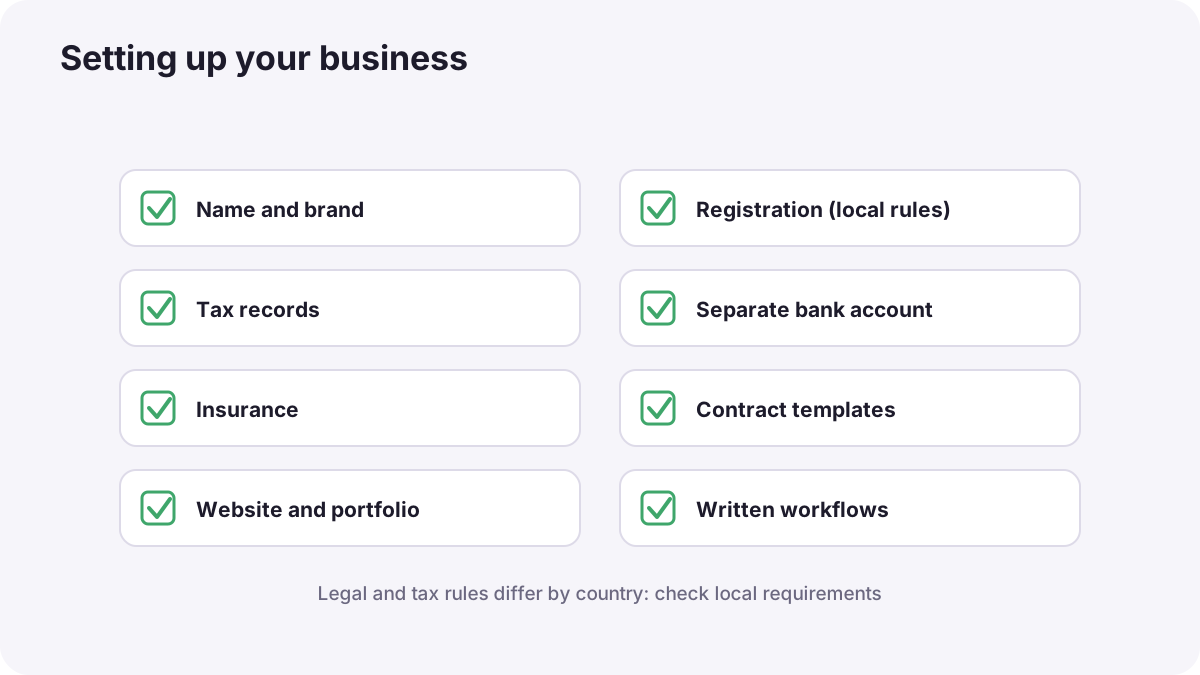
| Step | What to do |
|---|---|
| Name and brand | A clear name, simple logo and consistent style, as in personal brand and professional identity |
| Registration | Register the business as required where you live |
| Tax | Learn what you must declare and keep records |
| Bank account | Keep business money separate |
| Insurance | Equipment and liability cover where available |
| Contracts | Templates checked by a local professional |
| Website and portfolio | One place clients can see work and contact you |
Remember:First steps for photography businesses are explained in starting a photography business. Rules differ by country; local advice is worth paying for.
Systems that save time
- Enquiry and booking: a contact form, calendar and standard replies.
- Templates: quotes, contracts, invoices, emails and call sheets.
- Workflow: import, backup, editing and delivery steps written down, as in building a reliable capture-to-delivery workflow.
- Finance: invoicing, expense tracking and a tax savings account.
- Client records: contacts, past jobs and preferences.
Tip:Write each process down once. A written system lets you work faster, take holidays and train helpers later.
A simple one-page plan
Write one page with your services, ideal clients, prices, how clients will find you, your yearly income goal and monthly costs. Review it every few months, as in building a sustainable photography business.
Common mistakes
- Mixing personal and business money: confusing taxes and unclear profit.
- No insurance: one accident can cost more than a year's profit.
- Buying lots of equipment first: spend on what earns money.
- No written processes: everything depends on memory.
How professionals run their businesses
Successful business owners keep money separate, insure their work, use templates and written processes, review a simple plan regularly and invest in equipment only when it brings clear returns.
Practical examples
From side work to business
- Situation
- Your freelance video work now fills most weekends.
- What to do
- You register a business, open a separate account, buy insurance and create contract and invoice templates.
- Why it works
- A proper setup protects you and looks professional.
- Result
- Clients trust you with larger jobs.
Saving time
- Situation
- You spend hours writing the same emails.
- What to do
- You create templates for enquiries, booking confirmations and delivery.
- Why it works
- Systems remove repeated work.
- Result
- More time to shoot and edit.
Key points
- Set up a name and brand, registration, tax records, a separate account, insurance, contracts and a website.
- Build systems: booking, templates, written workflows, finance and client records.
- Write a one-page plan and review it regularly.
- Legal and tax rules differ by country; get local advice.
Frequently asked questions
Do I need to register my photography business?
Do I need insurance?
What tools does a photo business need?
Should I keep separate bank accounts?
Conclusion
A business is built from brand, legal basics, organized money and simple systems. Next, you will learn how to grow from a freelancer into a studio or agency.
Finished reading? Track your progress through Freelancing and careers.