Many photographers and filmmakers are too busy shooting to edit everything themselves, and brands produce more content than ever. That creates steady remote work for skilled editors, retouchers, colorists and sound editors. This lesson explains which post-production services are in demand, how to work from clear briefs and test edits, how to move large files safely and how to deliver reliably across time zones.
Services in demand
| Service | Typical clients | Learn in |
|---|---|---|
| Photo culling and editing | Wedding and event photographers | culling and selecting the strongest images |
| Retouching | Studios, brands, e-commerce | advanced retouching |
| Video editing | Creators, agencies, companies | building the rough cut |
| Short-form editing | Creators and brands | short-form video: reels, shorts and tiktok |
| Color grading | Filmmakers, agencies | color grading workflow and export |
| Sound cleanup and mixing | Podcasters, filmmakers | basic audio editing and mixing |
Working from briefs and test edits
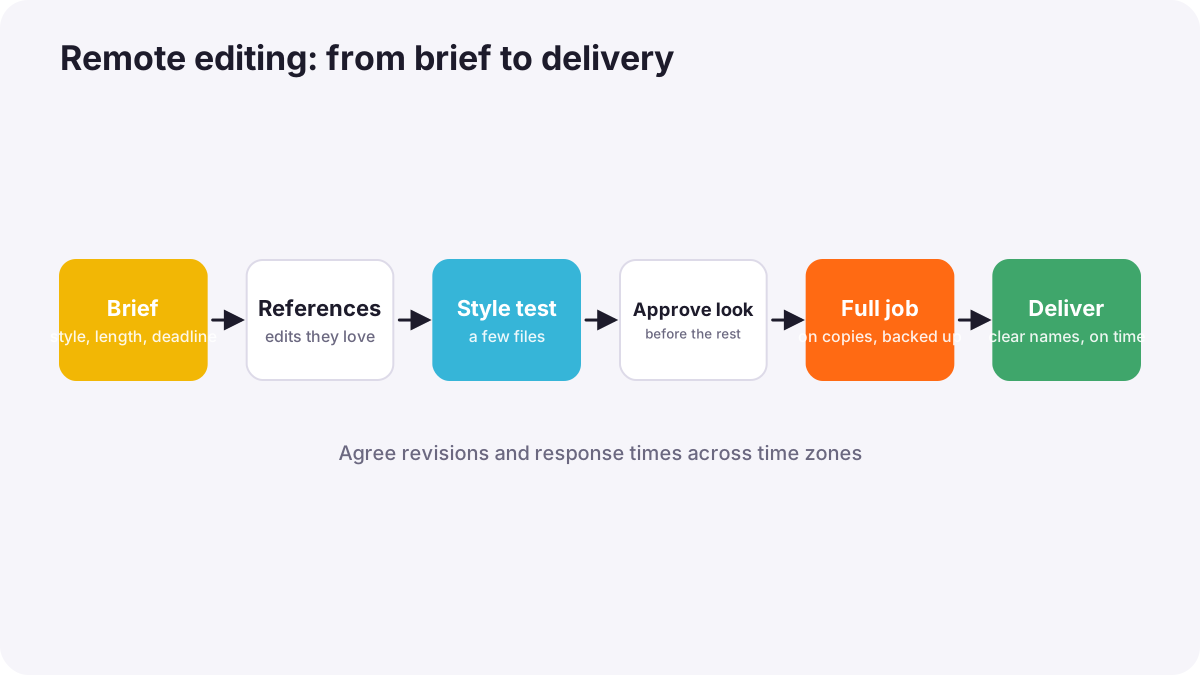
- Ask for a written brief: style references, length, format, deadline and number of revisions.
- Request sample edits the client loves, so you match their look.
- Do a short paid test or a sample on a few files before the full job.
- Confirm the look before editing everything.
Files, security and time zones
- Use reliable transfer: cloud links or shared drives with clear folder names.
- Keep originals safe: work on copies and back up, as in backup, redundancy and data protection.
- Protect client privacy: delete files when the job and agreed storage period end.
- Agree working hours and response times across time zones.
- Use proxies for large video projects, as in proxies and video delivery formats.
Common mistakes
- Starting the full job without a style test: large amounts of rework.
- Missing deadlines because of time zones: lost clients.
- Sharing client files publicly in your portfolio without permission: a breach of trust.
- No revision limits: endless changes.
How remote editors build steady work
Successful remote editors specialize, learn each client's style deeply, deliver consistently on time, communicate proactively about problems, protect files and become the trusted partner clients rely on every week.
Practical examples
A wedding editing partner
- Situation
- A busy wedding photographer edits until midnight every week.
- What to do
- You offer culling and color editing in their style after a test on 50 images.
- Why it works
- Matching their style saves them hours every week.
- Result
- A steady monthly client.
A creator's editor
- Situation
- A creator posts three short videos a week but hates editing.
- What to do
- You agree a style guide, turnaround times and a monthly package.
- Why it works
- Clear systems make remote editing reliable.
- Result
- Regular income and a long-term partnership.
Key points
- Culling, retouching, video and short-form editing, color and sound are in-demand remote services.
- Work from written briefs, references and a short test before full jobs.
- Use reliable file transfer, back up, protect privacy and plan for time zones.
- Specialize and become a dependable partner for regular clients.
Frequently asked questions
Can I earn money editing remotely?
How do I match a client's editing style?
How do I send large files?
Can I show client edits in my portfolio?
Conclusion
Post-production skills can bring steady remote income from anywhere. Next, you will design packages and learn how to raise your rates.
Finished reading? Track your progress through Freelancing and careers.