Creative income often arrives unevenly: a busy wedding season, then quiet months; three projects at once, then none. Good money habits turn that uneven income into a stable life and a business that can survive surprises. This lesson explains simple, practical habits for budgeting, saving, setting aside tax, tracking expenses and spending wisely on equipment. It gives general guidance only; for personal or tax decisions, speak to a qualified local adviser.
A simple money system
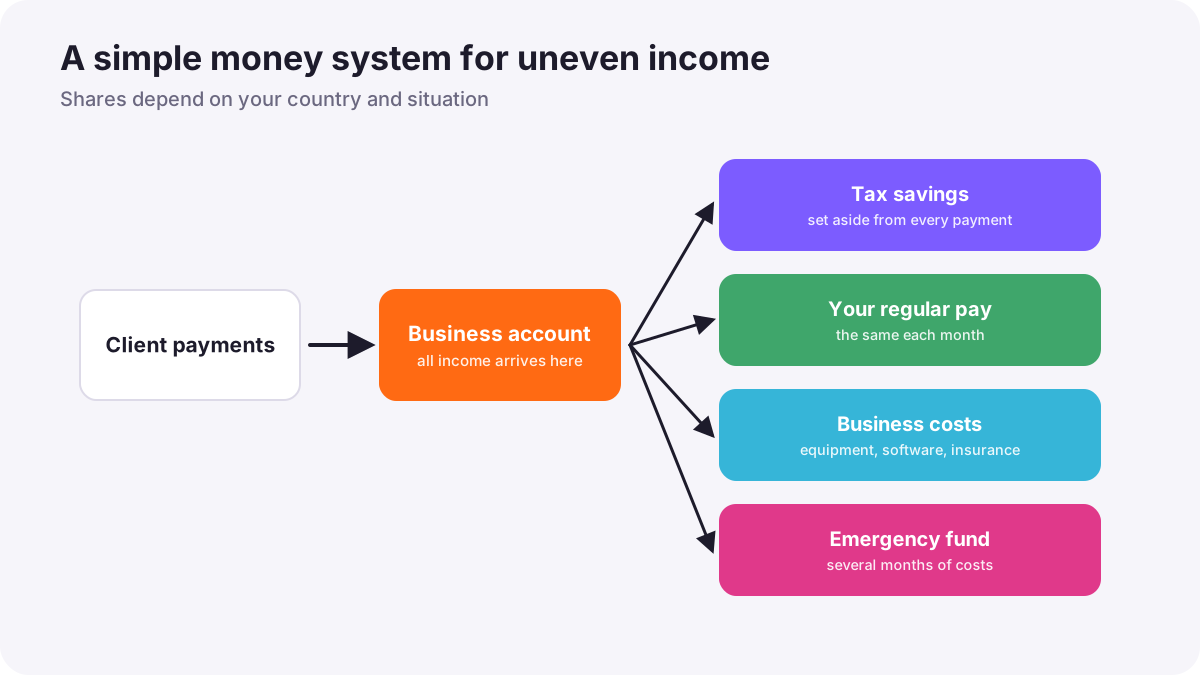
- Know your monthly needs: personal living costs and business costs.
- Separate accounts: business income, tax savings and personal spending.
- Set aside a share of every payment for tax in its own account; ask a local adviser what share is right.
- Pay yourself a regular amount from the business account, even when income varies.
- Build an emergency fund covering several months of costs, as in building a sustainable photography business.
Tracking income and expenses
| Track | Why |
|---|---|
| Every invoice and payment | Know what is owed and late, as in invoicing and payment processes |
| Every business expense, with receipts | Tax records and true profit |
| Income per service and client | See what earns most for your time |
| Monthly totals | Spot quiet seasons in advance |
Spending on equipment wisely
Buy equipment when it solves a real problem or earns money, not because something new appeared. Renting for occasional jobs, buying used and including equipment costs in your prices all protect your finances, as explained in technology choices and real photographic needs.
Getting paid on time
- Take deposits to book dates.
- Send invoices immediately with clear due dates.
- Follow up politely on late payments.
- Use contracts that state payment terms and what happens if payment is late.
Remember:Young creators should have a parent or guardian manage accounts, payments and any tax registration required.
Common mistakes
- Spending a big payment as if it were monthly salary: nothing left in quiet months.
- No tax savings: a large bill you cannot pay.
- Buying gear on credit for future work: debt without income.
- Not chasing late invoices: cash flow problems.
How professionals stay financially stable
Financially stable creatives separate their money, set aside tax, pay themselves regularly, keep emergency savings, track every invoice and expense, invest in equipment carefully and take advice from qualified professionals.
Practical examples
A busy season
- Situation
- You earn most of your income in four wedding months.
- What to do
- You pay yourself the same amount every month from a business account and keep the rest for quiet months and tax.
- Why it works
- A regular salary smooths uneven income.
- Result
- Calm, stable finances all year.
A new camera
- Situation
- A new camera model is released.
- What to do
- You rent it for one job before deciding.
- Why it works
- Renting tests whether it truly earns money.
- Result
- You keep your savings for now.
Key points
- Know your monthly needs and keep separate accounts for business, tax and personal spending.
- Set aside tax from every payment, pay yourself regularly and build an emergency fund.
- Track every invoice, payment and expense, and income per service.
- Buy equipment only when it solves a problem or earns money; rent or buy used when sensible.
- Take deposits, invoice promptly and follow up late payments; get qualified local advice.
Frequently asked questions
How do freelancers handle irregular income?
How much should I save for tax?
Should I buy or rent equipment?
How can I avoid late payments?
Conclusion
Steady money habits make a creative career sustainable. You have completed the course on earning with photography and video: choose your path, build services and skills, win clients or jobs, grow carefully and manage your money well.
Finished reading? Track your progress through Freelancing and careers.