A wedding or a major event happens once. There are no second takes for vows, speeches or a first dance, and the light, sound and crowd change all day. Wedding and event videographers combine documentary filming, careful sound recording and cinematic storytelling to turn a long day into films people will watch for decades. This lesson explains how to plan an event film, where to place cameras, how to record clear vows and speeches, how to work in low light and alongside the photographer, and what clients usually receive.
What makes event videography special
Event videography means filming real events such as weddings, conferences, parties and ceremonies as they happen. The planning, timeline and people skills are much the same as for event photography, explained in event and wedding photography. Video adds three challenges: you must record continuous action without missing key moments, record clear sound, and gather enough shots to edit a story.
Planning before the day
- Get the timeline: times for preparation, ceremony, speeches, first dance and other key moments.
- Visit or research the venue: light, power points, where you are allowed to stand, and any filming rules.
- Agree the deliverables and the style of film with the client in advance.
- Talk to the photographer and the event organizer so you can work as a team.
- Plan sound: who speaks, where microphones will go, and whether there is a sound system you can record from.
- Pack spares: batteries, cards, microphones and a second camera.
Camera coverage
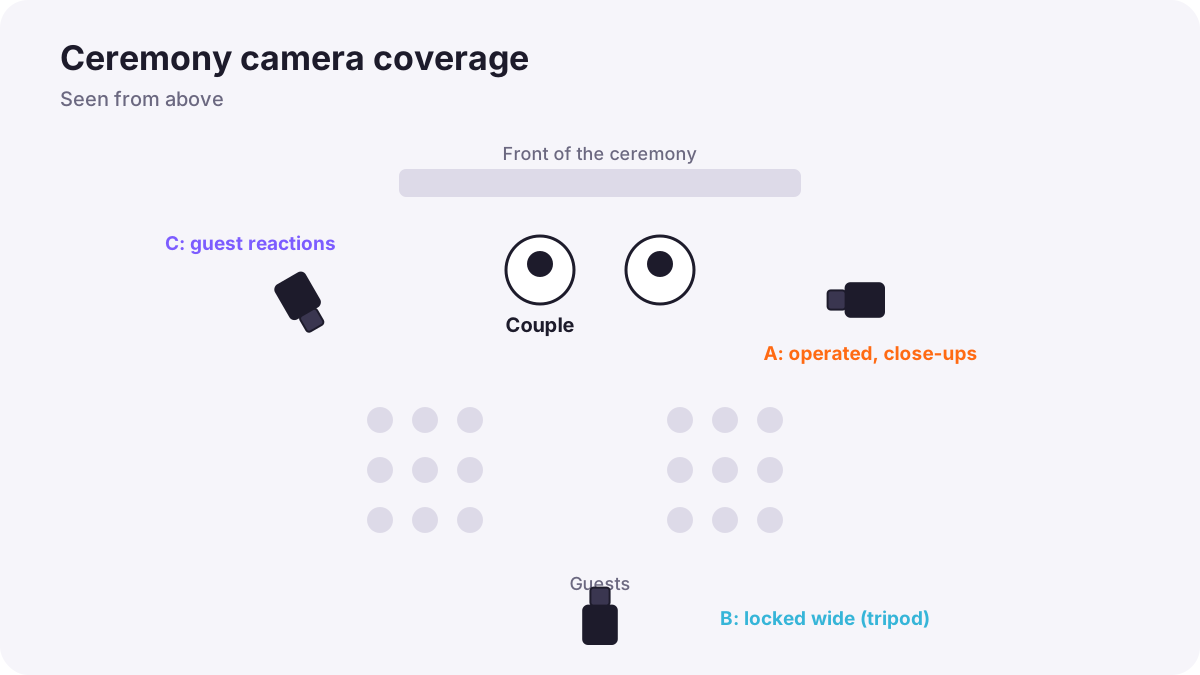
| Camera | Position | Purpose |
|---|---|---|
| A camera (operated) | Moving carefully at the side or back | Close-ups, reactions and details |
| B camera (locked) | On a tripod with a wide or medium view of the couple or stage | Safe, continuous recording of the whole ceremony |
| C camera (optional) | Facing the guests or from another side | Guest reactions and a second angle |
Tip:A locked-off camera recording continuously is your safety net. If the operated camera misses a moment, the wide camera still has it.
Through the day, gather a mix of shot sizes for editing: wide shots of the venue, medium shots of people, close-ups of faces and details like rings, flowers and decorations, as in shot sizes and camera angles for video.
Recording vows and speeches
Sound is often the most important part of an event film: vows, speeches and laughter carry the emotion. Camera microphones are usually too far away.
- Small lapel microphones on the people who will speak, recording to a small recorder or wireless system, as in lavalier and wireless microphones.
- A recorder near the speaker, for example on a lectern or table.
- A recording from the sound system, if the venue or band allows it.
- Backup recordings: record each important voice in two ways if you can.
Recording sound separately and syncing it later is explained in dual-system sound and syncing.
Low light and changing light
- Fast lenses and higher ISO: venues and evening receptions are often dark, as in low-light and night video.
- Small on-camera or stand lights: for dark receptions, used gently so they do not disturb guests.
- Fixed white balance: set for each space so colors do not shift, as in video mode and basic video settings.
- Watch for flicker from venue lights, as in continuous lighting for video.
Respect and teamwork
- Follow the rules of the venue and ceremony about where you may stand and when you may move.
- Stay quiet and discreet: the event is for the people, not the camera.
- Agree positions with the photographer: avoid standing in each other's shots, and share the best angles.
- Ask before filming children or guests in private moments, and respect anyone who does not want to be filmed.
Remember:Many ceremonies have cultural or religious traditions. Ask the couple and organizers in advance which moments matter most and what is appropriate to film.
Typical deliverables
| Film | Typical length | Content |
|---|---|---|
| Teaser or social clip | About 1 minute, often vertical | Quick highlights to share soon after the event |
| Highlight film | About 3 to 10 minutes | The story of the day with music and key moments |
| Feature or documentary film | About 15 to 30 minutes | A longer story with more of the day |
| Full ceremony and speeches | Real length | Complete recordings, often from several cameras |
Packaging and pricing video services are explained in pricing video services and hybrid photo and video packages.
Common mistakes
- Relying on the camera microphone: vows are quiet and unclear.
- Only one camera on the ceremony: one missed moment cannot be recovered.
- Standing in the photographer's shots: both teams lose good pictures.
- Running out of batteries or cards: key moments are missed.
- No detail or establishing shots: the edit lacks variety.
How wedding filmmakers work
Professional wedding filmmakers plan the day with the couple, place a locked wide camera for every key moment, record vows and speeches with lapel microphones and backups, and work as a quiet, friendly team with the photographer. They collect detail, establishing and reaction shots throughout the day, offload footage the same night, and deliver a short film quickly to share while the full films are edited.
Practical examples
Quiet vows
- Situation
- At a previous wedding, the vows were too quiet to hear.
- What to do
- This time you clip a small lapel microphone on one partner and place a recorder near the officiant.
- Why it works
- Close microphones record clear voices; two sources give a backup.
- Result
- Every word of the vows is clear in the film.
A missed ring exchange
- Situation
- A guest stood in front of your camera during the ring exchange.
- What to do
- You now place a locked wide camera at the front on a tripod before the ceremony.
- Why it works
- A second, fixed angle protects against blocked views.
- Result
- The moment is always covered.
Key points
- Event videography records real, unrepeatable events with continuous picture and clear sound.
- Plan the timeline, venue, rules, sound and deliverables with the client before the day.
- Use an operated camera plus a locked wide camera for key moments.
- Record vows and speeches with lapel microphones, recorders or the sound system, with backups.
- Work discreetly with the photographer and respect venue and ceremony traditions.
Frequently asked questions
How many cameras do I need to film a wedding?
How do videographers record wedding vows?
How long is a wedding highlight film?
Can the photographer and videographer work together?
Conclusion
Wedding and event videography depends on planning, safe multi-camera coverage, close and backed-up sound, low-light skills and respectful teamwork. Next, you will learn how to film interviews and documentary stories.
Finished reading? Track your progress through Types of photography.