Documentaries tell true stories with real people, places and events. They range from a two-minute portrait of a local baker to feature films about history or nature. Most combine two kinds of filming: interviews, where people tell their story, and observational filming, where the camera watches life unfold. This lesson explains how to frame and film interviews, how to film real life without disturbing it, how to gather the extra shots an editor needs, and how to treat the people you film with honesty and respect.
What documentary filming is
Documentary filming records real people and events to tell a true story. Like documentary photography, explained in documentary photography and photojournalism, it depends on trust, honesty and patience. In video, the story is told through people's own words, the sounds of real places and sequences of real action.
Filming interviews
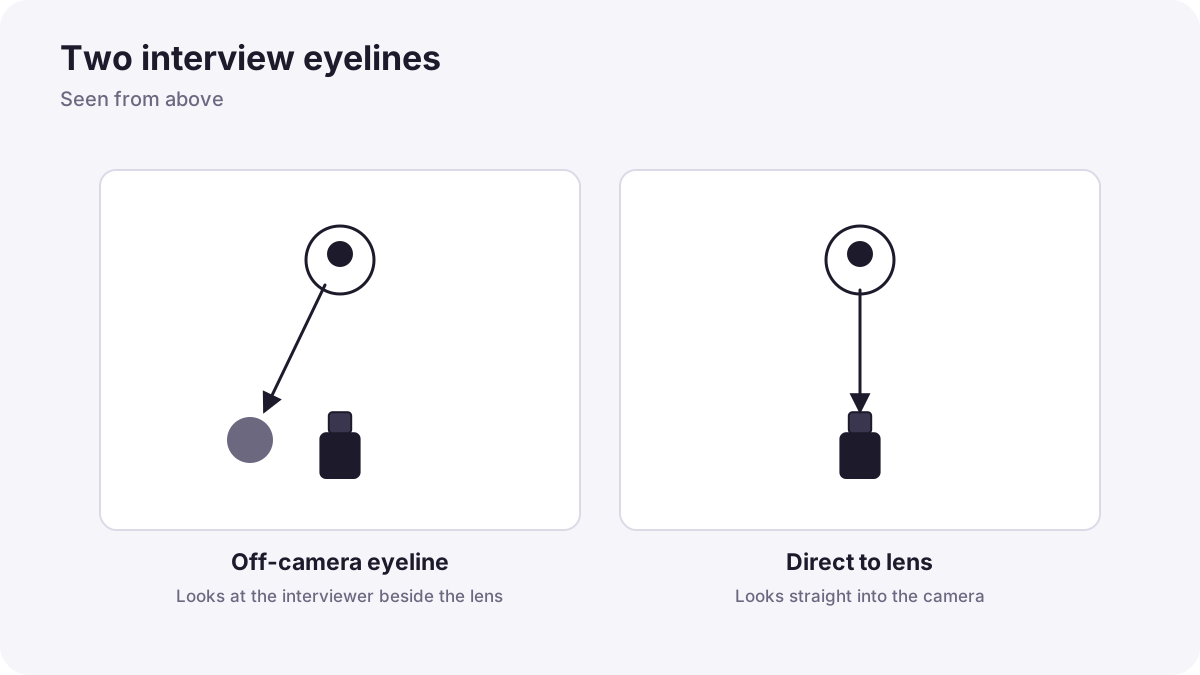
| Off-camera eyeline | Direct to lens | |
|---|---|---|
| Where the person looks | At the interviewer, sitting just beside the camera | Straight into the lens |
| Feeling | Natural, like overhearing a conversation | Personal, as if speaking to the viewer |
| Common use | Most documentaries and testimonials | Presenters, confessions, some creative documentaries |
- Framing: a medium close-up is the most common size; leave look room on the side the person faces, as in shot sizes and camera angles for video.
- Two angles: a second camera at a different size and angle lets the editor shorten answers without visible jumps.
- Lighting: a soft, short-side key with a lit background, as in interview lighting.
- Sound: a lapel microphone plus a second microphone if possible, as in recording clean dialogue on location.
Asking good questions and helping people relax are explained in conducting interviews on camera.
Observational filming
Observational filming, sometimes called fly-on-the-wall, means filming people doing what they normally do, without directing them. The goal is for people to forget the camera so their behavior stays natural.
- Spend time first: people relax after they get used to you being there.
- Keep equipment small: a light camera and a good microphone are less intimidating.
- Film sequences, not single shots: use the five-shot idea from your first video clips to cover each activity.
- Keep rolling: the best moments often come just before or after the action you expected.
- Anticipate: watch what is about to happen and be ready.
B-roll and the sound of real places
B-roll is the extra footage shown while people speak: their hands at work, their home, the street outside. It illustrates what they say and lets the editor shorten interviews smoothly. B-roll is explained fully in B-roll and cutaways.
Tip:Record clean sound of every place you film, such as a busy market, a quiet workshop or birds in a forest. This background sound, called ambience, makes the edited film feel real, as in room tone, ambience and wild sound.
Finding the story
- Start with a question: what does the film want to understand or show?
- Find a main character: audiences connect with a person more than with facts.
- Look for change or conflict: a challenge, a goal, a turning point.
- Expect the story to change: real life often surprises you; adjust as you film.
Story structure is explained in story structure for short videos, and planning projects in planning a photography project.
Ethics and consent
Documentaries show real people, so their trust matters. Explain clearly what the film is and where it will be shown, get informed consent and written releases where needed, be careful with vulnerable people and children, and never edit someone's words to change their meaning. Documentary ethics were explained in documentary photography ethics, and video releases are explained in filming people and places: releases and permissions for video.
Common mistakes
- Only filming interviews: the film becomes talking heads with nothing to look at.
- Directing real moments: the film loses honesty and viewers sense it.
- Poor interview sound: the story cannot be understood.
- Stopping recording too early: the best moments are missed.
- Editing words out of context: trust is broken and the film becomes dishonest.
How documentary filmmakers work
Documentary filmmakers spend time building trust before filming, keep small, quiet equipment, record excellent sound, and film long observational sequences alongside carefully lit interviews. They gather plenty of B-roll and ambience, review footage daily to find the story, and treat the people they film honestly in the edit.
Practical examples
A portrait of a carpenter
- Situation
- You are making a five-minute film about a local carpenter.
- What to do
- You film a lit interview, then spend a day filming observational sequences of her working, with workshop ambience.
- Why it works
- Her words give the story; real work and sound show it.
- Result
- A warm portrait that feels true and alive.
A nervous interviewee
- Situation
- A shopkeeper freezes when the camera starts.
- What to do
- You chat first, keep the camera rolling quietly, and use an off-camera eyeline so he talks to you, not the lens.
- Why it works
- A relaxed conversation produces natural answers.
- Result
- Honest, comfortable interview answers.
Key points
- Documentaries tell true stories through interviews, observational filming and real sound.
- Most interviews use an off-camera eyeline, a medium close-up, soft lighting and close microphones.
- Observational filming needs time, small equipment, sequences and patience.
- Gather B-roll and ambience so the editor can illustrate and shorten interviews.
- Find a character and a question, get informed consent, and never distort people's words.
Frequently asked questions
How do I film a documentary as a beginner?
Where should an interviewee look?
What is observational filming?
Do I need permission to film people for a documentary?
Conclusion
Documentary filming combines carefully filmed interviews with patient observational filming, rich B-roll and real sound, all built on trust and honesty. Next, you will learn how to film short vertical videos for social media.
Finished reading? Track your progress through Types of photography.