You do not need an expensive camera to earn your first money from photography and video. Many small businesses need regular photos and short videos for social media, websites and online shops, and they care more about reliability, good light and clear communication than about the camera. This lesson shows how to build a phone portfolio, which services sell well, how to price your first jobs, find clients and deliver professionally.
Build a phone portfolio
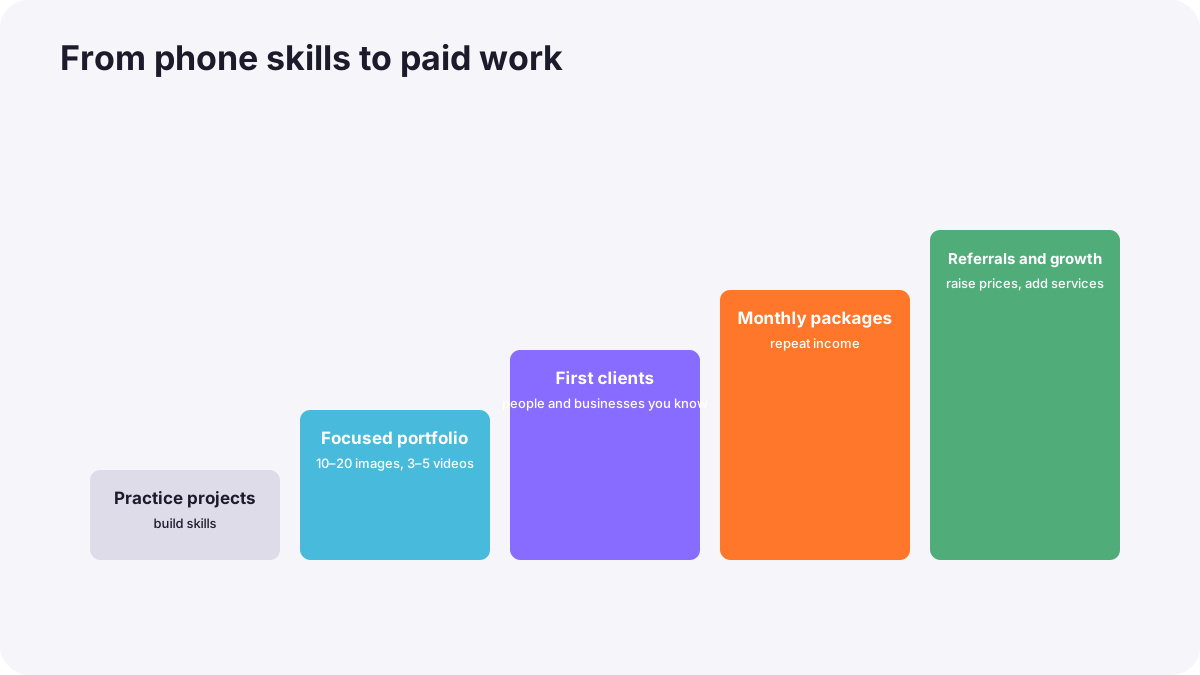
- Choose one or two services you want to be hired for, such as product photos or short social videos.
- Create practice projects for real or pretend clients: a café, a friend's shop, a local event.
- Select 10 to 20 of your best images or 3 to 5 short videos, as in building a professional photography portfolio.
- Show before-and-after examples of product photos or edits.
- Put it in one easy link: a simple website or portfolio page.
Services that suit phone creators
| Service | Typical clients |
|---|---|
| Product photos for online shops | Small brands, home businesses, marketplace sellers |
| Social media content packages | Cafés, salons, gyms, shops |
| Short vertical videos (reels) | Restaurants, events, local brands |
| Event highlights | Small parties, launches, community events |
| Real-estate and rental listing photos | Hosts, small agencies |
| Creator-style (UGC) videos | Brands that want authentic product videos |
Remember:Vertical social video skills are explained in short-form vertical video for social media.
Pricing your first jobs
- Price by package, for example 10 edited product photos or 4 short videos per month.
- Count all your time: planning, travel, shooting, editing and delivery, as in estimating costs, time and value.
- Start fair, not free: a low but real price builds a professional relationship.
- Raise prices as your portfolio, skills and demand grow, as in pricing photography services.
Remember:If you are under 18, involve a parent or guardian in agreements, payments and meeting clients, and meet only in safe, public or supervised places.
Finding and keeping clients
- Start with people you know and local businesses you already visit.
- Send a short, personal message with two or three examples that match their business, as in finding clients and building relationships.
- Agree the job in writing: what you deliver, when, the price and how they may use the files.
- Deliver on time, with clear file names and sizes for each platform.
- Ask for a review and a referral.
Common mistakes
- Working for free for too long: clients learn not to pay.
- Showing every photo in a portfolio: weak work hides strong work.
- No written agreement: disagreements about price and usage.
- Late delivery: lost repeat work.
- Using music or people without permission in client videos, as in filming people and places.
How phone creators grow
Successful phone creators start with one clear service, deliver reliably, collect testimonials, offer monthly packages for repeat income, and add equipment, skills and services as their clients grow. Many later add a camera, but their business is built on light, story, reliability and communication.
Practical examples
A café's social media
- Situation
- A local café posts blurry photos and gets little engagement.
- What to do
- You offer a monthly package of 12 photos and 4 short vertical videos shot by window light.
- Why it works
- Regular, good-looking content is valuable to small businesses.
- Result
- A paying monthly client and a strong portfolio piece.
An online seller
- Situation
- A friend's handmade jewelry shop has inconsistent photos.
- What to do
- You build a window-light product setup and photograph the whole range consistently for a fair package price.
- Why it works
- Consistent product photos help sales and show your skill.
- Result
- Better shop images, a testimonial and new referrals.
Key points
- Small businesses value reliability, good light and communication more than camera brand.
- Build a focused portfolio of 10 to 20 images or 3 to 5 short videos for the work you want.
- Product photos, social content packages, short videos and event highlights suit phone creators.
- Price in packages, count all your time, start fair and raise prices as you grow.
- Agree in writing, deliver on time and ask for reviews and referrals.
Frequently asked questions
Can I really earn money with only a phone?
What should I charge for my first phone jobs?
How do I find my first client?
I am under 18. Can I work as a creator?
Conclusion
Your phone can be the start of a creative career. Build a focused portfolio, offer clear services, deliver reliably and keep learning. You have completed the smartphone photography and filmmaking course; the rest of the Academy will help you grow into any camera, any genre and any creative job.
Finished reading? Track your progress through Smartphone photo and film.